
Myopia (Short-Sightedness) Treatment
Blurred distance vision · Prof. Dr. Fırat Helvacıoğlu, FEBOS-CR · Veni Vidi Eye Clinic, Caddebostan – Kadıköy, Istanbul
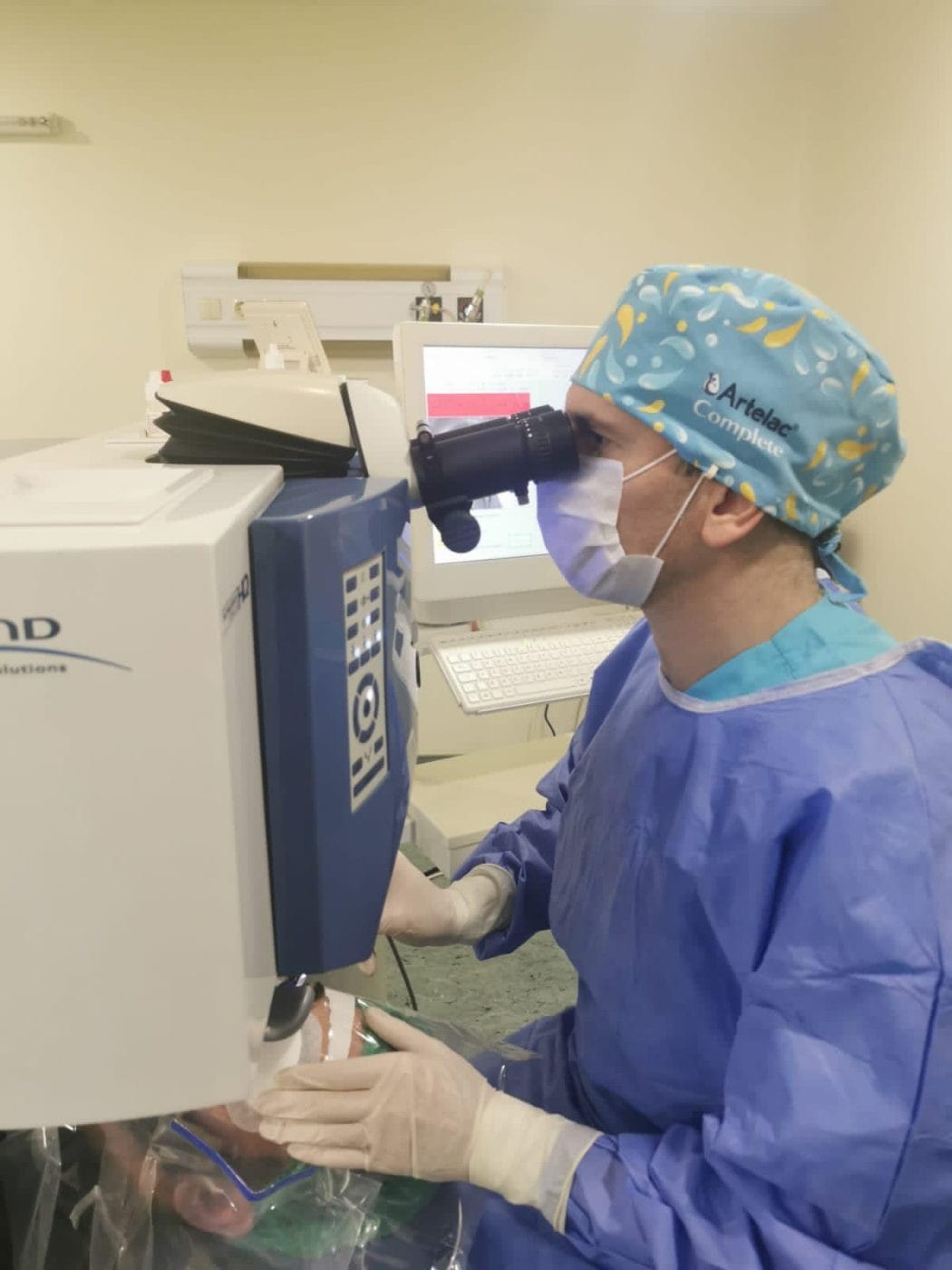
Myopia is a refractive error in which distant objects appear blurred. Options for myopia treatment include glasses and contact lenses. In suitable people over 18 with a stable prescription, laser methods such as SMILE Pro, No Touch or LASIK can also treat it permanently; in high myopia, a phakic intraocular lens (ICL) can do so. In children, specific methods can slow the progression of myopia.
What is myopia?
Myopia (short-sightedness) is a refractive error in which distant objects appear blurred while near objects are clear. It usually occurs because the eye is longer than normal, and sometimes because the cornea is too steeply curved. As a result, the image comes into focus in front of the retina. The prescription has a minus (–) value; doctors generally consider –6 dioptres and above as high myopia.
Myopia is increasing rapidly worldwide. According to an analysis of 145 studies, 23% of the world’s population was myopic in 2000, and the analysis projects that this will reach about 50% by 2050, with high myopia reaching 10%.
Symptoms and risks
- Blurred vision of distant signs, the board or the television; squinting
- Difficulty seeing, especially when driving at night
- Eye strain and headaches
High myopia is not just a matter of prescription: as the eye elongates, the retina thins and the risk of retinal tears/detachment, myopic maculopathy, glaucoma and early cataract increases. We therefore advise people with myopia to have regular eye and retinal examinations, even if glasses or surgery have corrected their prescription.
Myopia treatment and myopia control in children
Myopia usually begins at school age and increases throughout growth. In children, the aim is not only to provide clear vision but also to slow the rate at which the prescription increases, because the higher the prescription in adulthood, the greater the future risks to eye health.
- Spending time outdoors: More time spent in daylight reduces the development of myopia.
- Low/moderate-dose atropine drops, specially designed spectacle lenses and contact lenses, orthokeratology (overnight lenses): A Cochrane network meta-analysis of 104 randomised trials (17,509 children) reported that these methods can slow myopia progression and axial elongation, although the level of evidence and long-term effect vary between methods.
- Breaks from near work: We recommend regular breaks during prolonged screen and book use.
We determine the suitable method at a paediatric eye examination according to the child’s age, prescription and rate of progression. We do not perform laser eye surgery in children.
Myopia treatment in adults
| Option | Suitable for |
|---|---|
| Glasses | All ages and prescriptions; in high myopia, lenses can become thick and images appear smaller |
| Contact lenses | People who do not want glasses or who play sports; in high myopia they give a more natural image than glasses |
| Laser (SMILE Pro, No Touch, Q-LASIK, Femto-LASIK) | Age 18–40, stable prescription, suitable cornea; excellent results in low and moderate myopia |
| Phakic intraocular lens (ICL) | High myopia beyond laser limits, or young adults whose cornea is unsuitable for laser |
| Refractive lens exchange | Usually over 45, with presbyopia (in high myopia, we assess the retinal risk separately) |
A Cochrane review comparing laser surgery with phakic intraocular lenses for moderate to high myopia found a lower risk of losing best spectacle-corrected vision with phakic lenses; for low and moderate myopia, current laser methods offer high efficacy and safety. More: laser eye surgery · phakic intraocular lens (ICL).
For contact lens wear, the doctor determines the suitable lens type and power at the examination; the patient then obtains the lens according to this recommendation. Regular check-ups monitor lens fit and corneal health.
Am I suitable for myopia surgery?
- Age: At least 18; the most suitable period is usually between 18 and 40.
- Stable prescription: Your prescription should not have changed significantly (by more than 0.5 dioptres) in the past year.
- Healthy cornea: Corneal mapping (topography/tomography) and thickness measurements must be normal, and we must rule out keratoconus.
- General health: We do not perform surgery during pregnancy or breastfeeding. We also assess uncontrolled diabetes and certain rheumatic and immune disorders carefully.
- Eye health: Significant dry eye, blepharitis or intraocular disease needs treatment first.
For patients unsuitable for laser, we consider myopia treatment with a phakic intraocular lens (ICL) or refractive lens exchange.
Frequently asked questions
The exact limit varies from person to person depending on corneal thickness and structure. Laser gives excellent results in low and moderate myopia; in high myopia, if the cornea is insufficient, we prefer a phakic intraocular lens (ICL).
Myopia usually increases during childhood and adolescence and becomes stable in most people in their 20s. In children, myopia control methods can slow the rate of progression.
In people with a stable prescription, the result is largely permanent. A small number of patients may develop a minor prescription over time; if the cornea is suitable, we can perform an enhancement.
As the eye elongates, the retina thins and the risk of retinal tears/detachment increases. This risk persists even if surgery corrects the prescription, so regular retinal examinations are important.
Have your child’s eyes examined. Methods such as spending more time outdoors, low-dose atropine drops or myopia control lenses can slow the increase in prescription.
References
- Holden BA et al. Global prevalence of myopia and high myopia and temporal trends from 2000 through 2050. Ophthalmology. 2016;123(5):1036–1042. doi:10.1016/j.ophtha.2016.01.006
- Lawrenson JG et al. Interventions for myopia control in children: a living systematic review and network meta-analysis. Cochrane Database Syst Rev. 2025;2(2):CD014758. doi:10.1002/14651858.CD014758.pub3
- Dhakal R et al. Time spent outdoors as an intervention for myopia prevention and control in children: an overview of systematic reviews. Ophthalmic Physiol Opt. 2022;42(3):545–558. doi:10.1111/opo.12945
- Barsam A, Allan BD. Excimer laser refractive surgery versus phakic intraocular lenses for the correction of moderate to high myopia. Cochrane Database Syst Rev. 2014;(6):CD007679. doi:10.1002/14651858.CD007679.pub4
- Wen D et al. Postoperative efficacy, predictability, safety, and visual quality of laser corneal refractive surgery: a network meta-analysis. Am J Ophthalmol. 2017;178:65–78. doi:10.1016/j.ajo.2017.03.013
This page provides patient information and does not replace an examination or medical assessment. We determine the myopia treatment that is right for you after an eye examination and measurements.
Myopia treatment assessment
Prof. Dr. Fırat Helvacıoğlu · Veni Vidi Eye Clinic, Bağdat Caddesi No: 257, Caddebostan – Kadıköy, Istanbul, Türkiye