
Blepharitis – Eyelid Margin Inflammation
Meibomian gland dysfunction · Demodex · Lid hygiene · Prof. Dr. Fırat Helvacıoğlu, FEBOS-CR · Veni Vidi Eye Clinic, Caddebostan – Kadıköy, Istanbul
Blepharitis is chronic inflammation of the eyelid margin and the base of the eyelashes, causing redness, flaking, itching, burning and stuck-together eyelids in the morning. Bacteria, meibomian gland blockage or Demodex mites may cause it. The cornerstone of blepharitis treatment is regular warm compresses and lid hygiene; if needed, we add drops, ointments and oral medication.
What is blepharitis?
Blepharitis is chronic inflammation of the eyelid margin and the base of the eyelashes. Symptoms include redness, flaking, crusting, itching and burning at the base of the lashes; the eyelids may stick together in the morning. Although it is not contagious, it tends to recur and usually requires long-term care. In addition, it is one of the most common causes of dry eye.
Types of blepharitis
- Anterior blepharitis: Affects the base of the eyelashes; associated with staphylococcal bacteria or seborrhoeic dermatitis (dandruff).
- Posterior blepharitis – meibomian gland dysfunction: The oil glands within the eyelids become blocked and their secretion thickens; tears evaporate quickly. Rosacea often accompanies it.
- Demodex blepharitis: Microscopic mites (Demodex) living at the base of the eyelashes form cylindrical dandruff (collarettes) around the lashes. According to a meta-analysis, researchers find Demodex in about one third of people, and in more than half of those over 60.
Symptoms
- Redness, swelling and itching of the eyelid margins
- Flakes and crusts at the base of the lashes; eyelids stuck together in the morning
- Burning, stinging, grittiness; vision that fluctuates during the day
- Loss of eyelashes or misdirected lashes
- Recurrent styes and chalazia (oil gland cysts in the eyelid)
Blepharitis treatment options
- Lid hygiene (the cornerstone of treatment): Warm compresses for 5–10 minutes once or twice a day, then gently massage the lid margins and clean them with a lid-cleansing solution or wipes.
- Drops and ointments: Antibiotic ointments, short courses of anti-inflammatory drops, preservative-free artificial tears.
- Treatment of Demodex: Lid products containing tea tree oil; in some countries, approved lotilaner eye drops. In the Saturn-2 trial of 412 patients, collarette clearance at 6 weeks reached 56% with lotilaner drops (placebo 12.5%).
- Oral treatment: In rosacea or resistant meibomian gland disease, doctors can use antibiotics such as doxycycline/azithromycin under medical supervision.
- Device-based treatments: In resistant meibomian gland dysfunction, we may consider treatments such as thermal pulsation or intense pulsed light (IPL) in selected patients.
According to a Cochrane review, lid hygiene reduces symptoms and topical antibiotics are beneficial in anterior blepharitis; however, no single blepharitis treatment cures chronic blepharitis completely. Regular care is therefore the most important step.
Why does blepharitis treatment matter before eye surgery?
Blepharitis and meibomian gland disease need treatment before cataract, smart lens or laser eye surgery. The bacterial load on the lid margin can increase the risk of infection, and in addition, a disrupted tear film adversely affects the accuracy of pre-operative measurements and comfort after surgery. For this reason, Prof. Dr. Fırat Helvacıoğlu carefully assesses the ocular surface before cataract and laser surgery.
Frequently asked questions
No, blepharitis is not contagious. However, we recommend not sharing towels and eye make-up for general hygiene.
Blepharitis is usually chronic and recurrent. However, with regular lid care, most patients can keep symptoms under control.
During flare-ups, it is advisable to stop wearing eye make-up; afterwards, avoid products applied at the lash line and remove make-up thoroughly every night.
Yes. Blockage of the meibomian glands predisposes to recurrent styes and chalazia, so treating blepharitis reduces their recurrence.
References
- Lindsley K et al. Interventions for chronic blepharitis. Cochrane Database Syst Rev. 2012;(5):CD005556. doi:10.1002/14651858.CD005556.pub2
- Amescua G et al. Blepharitis Preferred Practice Pattern®. Ophthalmology. 2019;126(1):P56–P93. doi:10.1016/j.ophtha.2018.10.019
- Nichols KK et al. The international workshop on meibomian gland dysfunction: executive summary. Invest Ophthalmol Vis Sci. 2011;52(4):1922–1929. doi:10.1167/iovs.10-6997a
- Gaddie IB et al. Lotilaner ophthalmic solution 0.25% for Demodex blepharitis: randomized, vehicle-controlled, multicenter, phase 3 trial (Saturn-2). Ophthalmology. 2023;130(10):1015–1023. doi:10.1016/j.ophtha.2023.05.030
- Maleki B et al. Global prevalence of human Demodex mite: a systematic review and meta-analysis. Acta Trop. 2025;268:107693. doi:10.1016/j.actatropica.2025.107693
This page offers patient information and does not replace an examination or medical assessment. We determine the right treatment for you after an eye examination and measurements.
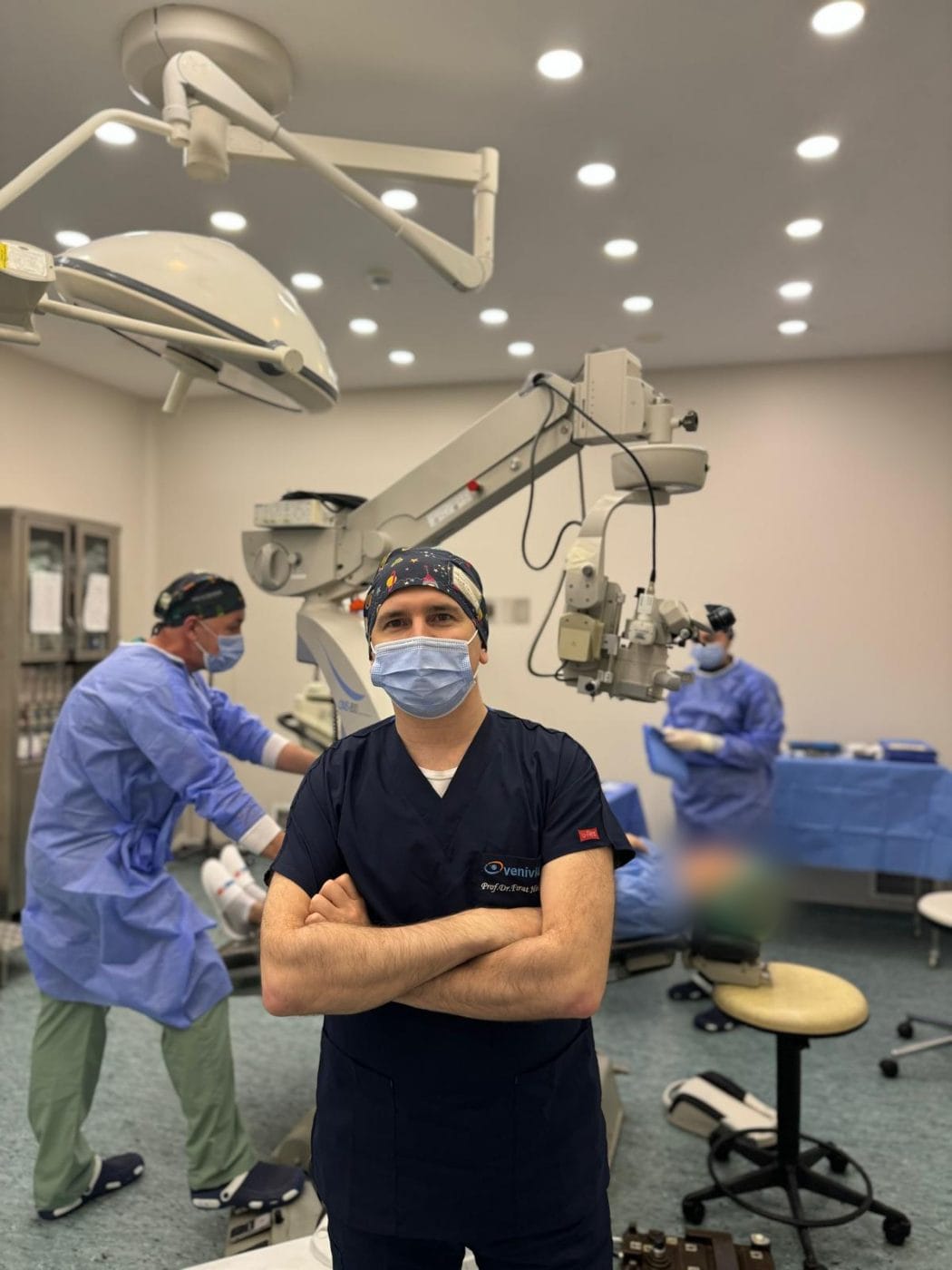
Blepharitis and ocular surface examination
Prof. Dr. Fırat Helvacıoğlu · Veni Vidi Eye Clinic, Bağdat Caddesi No: 257, Caddebostan – Kadıköy, Istanbul, Türkiye