
Smart Lens Surgery
Premium intraocular lenses (trifocal, EDOF, toric) · Prof. Dr. Fırat Helvacıoğlu, FEBOS-CR · Veni Vidi Eye Clinic, Caddebostan – Kadıköy, Istanbul
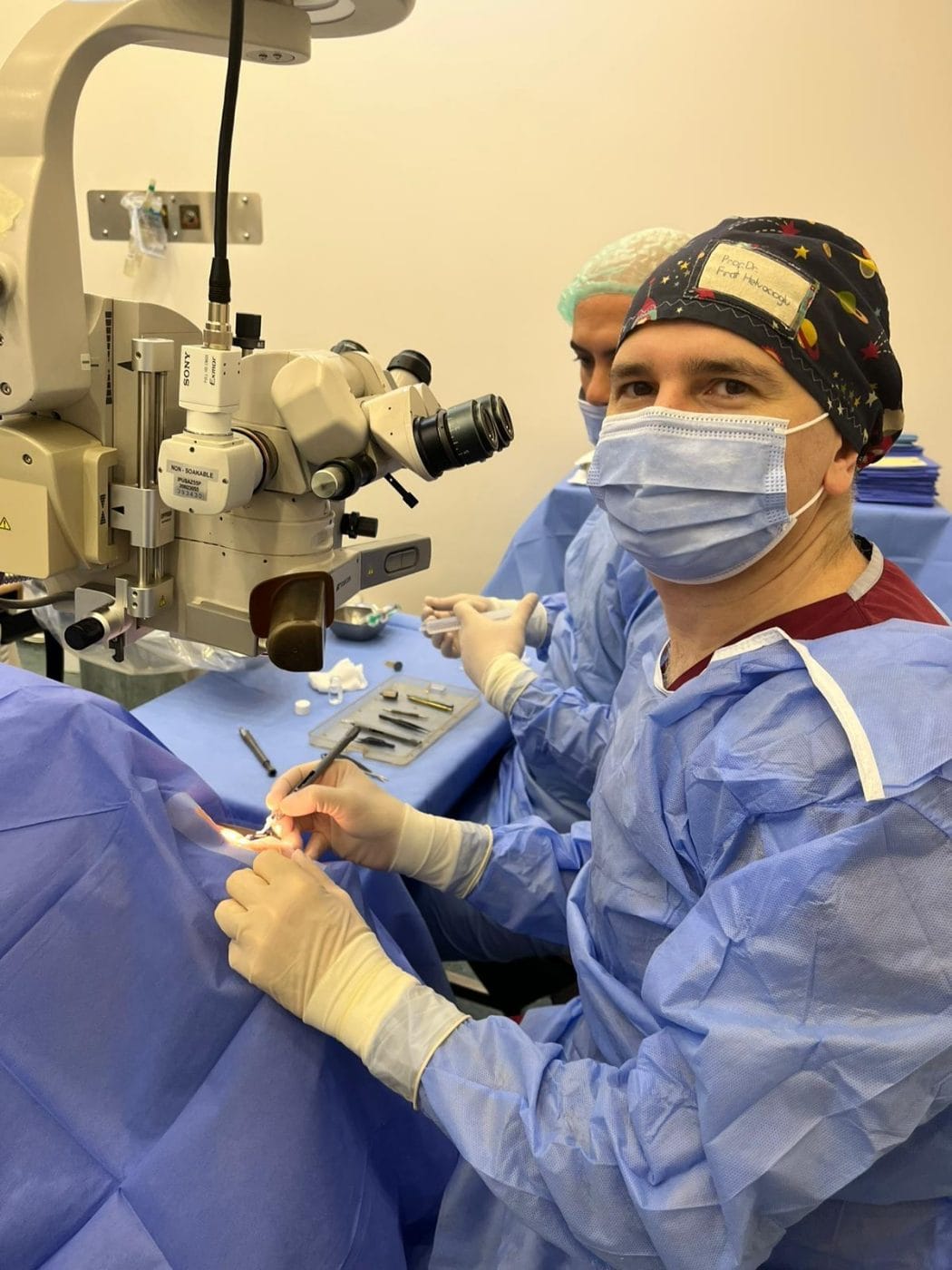
Smart lens surgery replaces the eye’s natural lens with a special intraocular lens (a multifocal or EDOF lens) that provides clear vision at distance, intermediate and near. It uses the same technique as cataract surgery, takes place under topical (eye-drop) anaesthesia and usually lasts 15–20 minutes. The aim is to minimise the need for glasses in daily life after surgery.
On this page
- What is a smart lens?
- Who is a candidate, and who is not?
- Types of smart lenses
- What is a trifocal lens?
- No cataract: refractive lens exchange
- How is the surgery performed?
- How is the right lens chosen?
- Spectacle independence rates
- Halos and glare (post-surgery dysphotopsia)
- Smart lens or laser?
- Recovery
- Cost and international patients
- Frequently asked questions
What is a smart lens?
A smart lens is a special intraocular lens that can provide clear vision at more than one distance. Its medical name is a multifocal (trifocal) or EDOF (extended depth of focus) intraocular lens; surgeons also call such lenses premium or presbyopia-correcting IOLs.
After the age of 40 the eye’s natural lens loses its flexibility and near vision becomes more difficult. Doctors call this presbyopia (age-related loss of near vision). Later in life the natural lens becomes cloudy and turns into a cataract. Standard (monofocal) lenses focus at only one distance, whereas smart lenses distribute light to distance, intermediate and near foci through special rings on their optical surface, treating both the cataract and the near-vision problem in a single operation.
Who is a candidate for a smart lens, and who is not?
Usually good candidates
- Patients having cataract surgery who want to be independent of glasses
- People over 40–45 who need reading glasses and have a high prescription
- Patients with a healthy cornea, retina and macula
- Patients with realistic expectations who accept a period of adaptation
Require careful assessment
- Patients with macular disease, advanced glaucoma or diabetic retinopathy
- Patients with an irregular cornea (e.g. advanced keratoconus)
- Patients with significant untreated dry eye
- Professional drivers who drive a great deal at night (an EDOF lens may be more suitable for them)
We decide whether smart lens surgery suits you after a detailed eye examination and measurements. In patients who are not suitable for a multifocal lens, monofocal or EDOF lenses can also achieve excellent results.
What types of smart lenses are there?
| Lens type | Distances seen clearly | Likelihood of halos | Suitable for |
|---|---|---|---|
| Trifocal | Distance, intermediate (computer) and near (reading) | More noticeable early on; usually decreases over time | Patients who want the highest level of spectacle independence |
| EDOF (extended depth of focus) | Distance and intermediate; partial near | Lower | Frequent night drivers; people who work a lot on computers |
| Toric trifocal / toric EDOF | As above, and also corrects astigmatism | Depends on the base lens type | Patients with significant corneal astigmatism |
| Monofocal (standard) | One distance | Lowest | Patients who do not mind wearing glasses; patients unsuitable for a smart lens because of eye disease |
Today, trifocal lenses have largely replaced bifocal lenses. This is because trifocal lenses also provide clear vision at intermediate distance, such as a computer screen or car dashboard.
More information: Trifocal lens · EDOF lens · Toric lens · Monofocal lens
What is a trifocal lens?
A trifocal lens is a smart intraocular lens that provides clear vision at three distances: far, intermediate and near. It replaces the natural lens during cataract surgery or during smart lens surgery performed for presbyopia. Special optical rings on the lens surface split incoming light into three foci, with the aim of spectacle-free vision for distance tasks such as driving, intermediate tasks such as using a computer screen, and near tasks such as reading a book or phone.
| Distance | In daily life |
|---|---|
| Far | Driving, watching television, recognising faces |
| Intermediate (about 60–80 cm) | Computer screen, car dashboard, kitchen worktop |
| Near (about 40 cm) | Books, newspapers, mobile phone |
- Who is it suitable for? Cataract or presbyopia patients with a healthy retina, cornea and optic nerve who want to be as independent of glasses as possible.
- Who may it not suit? In patients with macular disease, advanced glaucoma, an irregular cornea or significant untreated dry eye — and in those who drive a lot at night and are sensitive to halos — EDOF or monofocal lenses may be more suitable.
- If you have astigmatism: In eyes with astigmatism, we use the toric version of the trifocal lens so that the same operation also corrects the astigmatism.
- Halos: With trifocal lenses, halos around lights at night are common, especially in the first months; they usually diminish as the brain adapts. For details, see the halos and glare section.
According to a Cochrane review comparing trifocal and EDOF lenses, distance vision is similar with both lens types, while trifocal lenses perform better for near vision. We choose the most suitable lens for you by considering your eye measurements, occupation and visual expectations together.
I don’t have a cataract — can I still have a smart lens? (Refractive lens exchange)
Yes. Surgeons call the replacement of a clear natural lens with a smart lens, before a cataract has developed, refractive lens exchange (RLE, also known as clear lens exchange). The surgical technique is the same as cataract surgery; the difference is that the aim is to correct the spectacle prescription and age-related loss of near vision rather than to treat a cataract. Depending on the lens chosen (trifocal, EDOF, toric), the treatment targets distance, intermediate and near vision together.
Who is it suitable for?
- People over 45 who have started using reading glasses: particularly those who wear glasses for both distance and near.
- High hyperopia: In high hyperopia, which is difficult to correct with laser, outcomes and patient satisfaction are generally high.
- Patients unsuitable for laser or ICL: Patients with high prescriptions whose cornea is unsuitable for laser correction or whose anterior chamber is unsuitable for an ICL.
- Patients with significant astigmatism: A toric smart lens also corrects astigmatism in the same operation.
Advantages
Because the surgeon removes the natural lens, a cataract will not develop in the future, and near vision does not deteriorate further with age. In addition, unlike laser surgery, smart lens surgery does not remove any corneal tissue. The surgeon operates under topical anaesthesia, and the procedure usually takes 10–15 minutes per eye.
Refractive lens exchange and insurance
When there is no cataract, refractive lens exchange to correct a spectacle prescription is an elective procedure, and health insurance generally does not cover it. Coverage for cataract surgery, however, depends on your policy (see Cost and international patients).
How does smart lens surgery work?
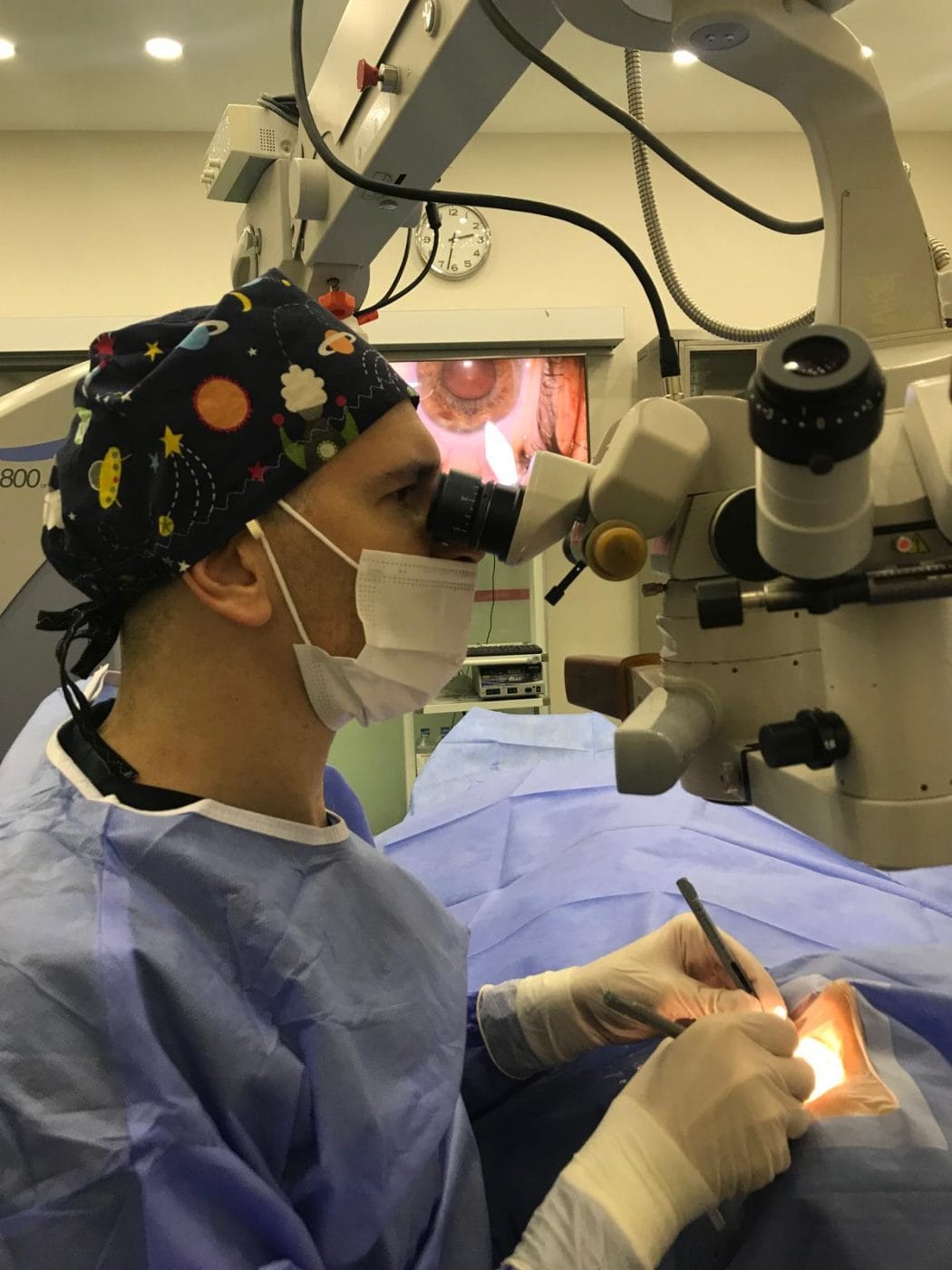
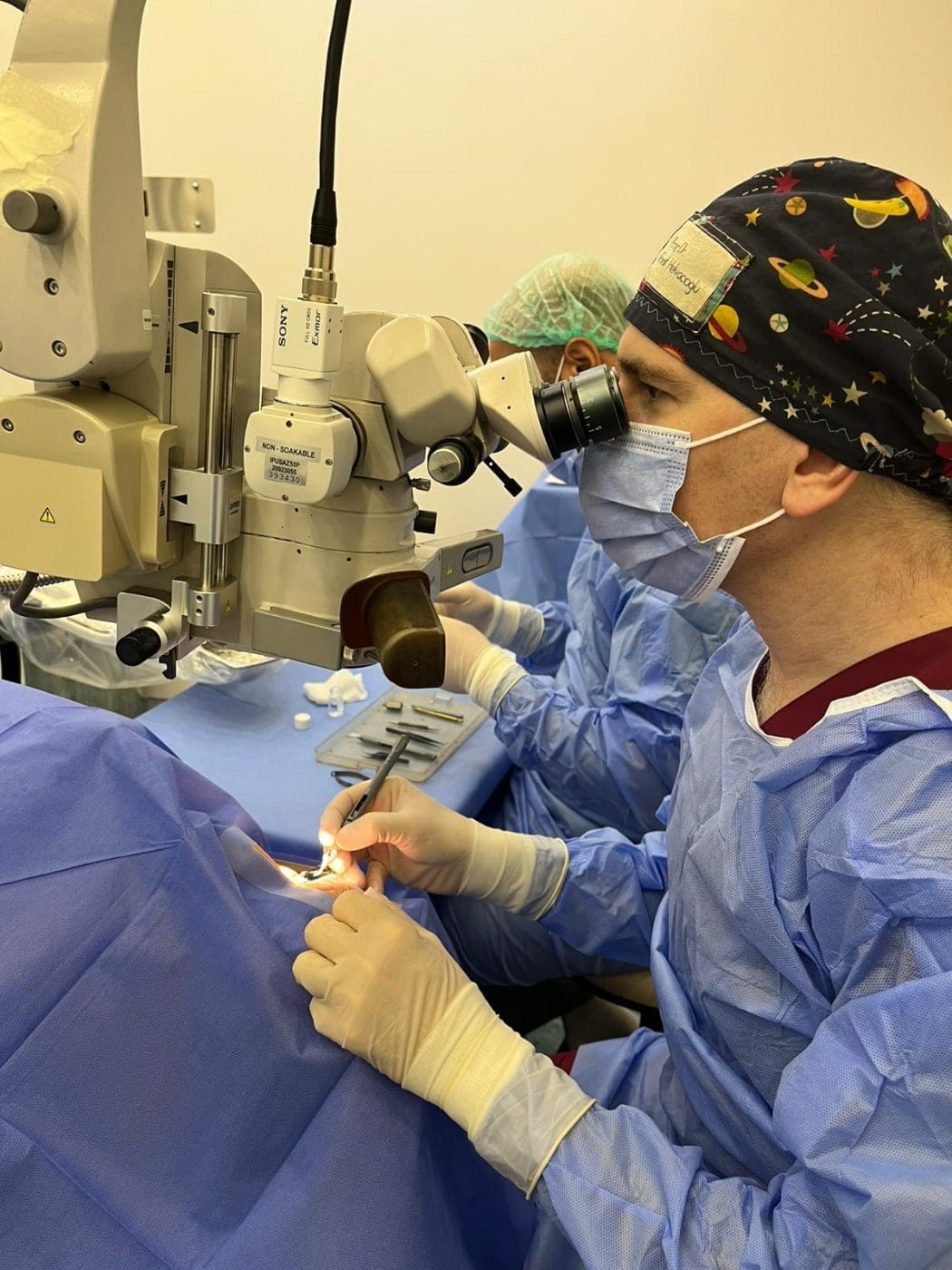
Smart lens surgery uses the same technique (phacoemulsification) as cataract surgery:
- Anaesthesia: Drops numb the eye; the patient stays awake and feels no pain.
- Micro-incision: The surgeon makes a self-sealing incision of about 2–2.8 mm at the edge of the cornea.
- Removal of the natural lens: Ultrasound energy breaks the lens into small fragments, which the surgeon then removes.
- Implantation of the smart lens: The surgeon places the foldable smart lens inside the capsular bag and centres it precisely. For toric lenses, the surgeon then rotates the lens to the axis determined by the pre-operative measurements.
The procedure usually takes 15–20 minutes, and the patient goes home the same day. We usually operate on the two eyes a few days to a few weeks apart.
How do we choose the right smart lens?
The most important determinant of success in smart lens surgery is choosing the right lens, at the right power, for the right patient. At the consultation, we perform the following assessments:
- Optical biometry: We measure the axial length of the eye and the corneal power, then calculate the lens power with up-to-date formulas.
- Corneal topography and astigmatism analysis: This analysis determines the need for a toric lens and the regularity of the cornea.
- OCT (retina and macula scan): This scan rules out hidden retinal problems that could affect the outcome of a smart lens.
- Dry eye and pupil measurements: We assess factors that may increase the risk of halos and, if dry eye is present, treat it first.
- Lifestyle discussion: Your occupation, how often you drive at night, and your reading and computer habits determine the type of lens.
Our approach
Prof. Dr. Fırat Helvacıoğlu is a co-author of published scientific studies on multifocal lens outcomes and a member of the Medical Advisory Board of RLES AI, a clinical decision support platform developed for cataract and refractive surgery planning. Lens selection is based not on the brand but on your eye measurements and lifestyle expectations.
What is the rate of spectacle independence after smart lens surgery?
Scientific studies show that trifocal lenses achieve a high rate of spectacle independence in suitable patients:
- A meta-analysis of 13 studies of one trifocal lens model reported that 91.6% of patients were completely spectacle-free: 95.9% at distance, 96.3% at intermediate and 89.6% at near.
- According to a Cochrane review, distance vision is similar with trifocal and EDOF lenses; trifocal lenses perform better for near vision.
- Network meta-analyses comparing different lens types have shown that trifocal lenses significantly improve near vision without compromising distance vision.
Prof. Dr. Fırat Helvacıoğlu’s research on smart lenses
Prof. Dr. Fırat Helvacıoğlu and his team have presented their smart lens research at ESCRS congresses: biometric analysis and refractive outcomes in trifocal lens surgery (Lisbon, 2017), the effect of viscoelastic retained in the capsular bag on refractive shift with plate-haptic multifocal lenses (Lisbon, 2017), topographic factors leading to dissatisfaction after trifocal lens implantation (Vienna, 2018; Paris, 2019), visual performance of bifocal and trifocal diffractive lenses (Paris, 2019), and fine-tuning with PRK after multifocal lens implantation (Vienna, 2018).
Sources: Zhu et al., Ophthalmol Ther 2023; Tavassoli et al., Cochrane 2024; Cho et al., JAMA Ophthalmol 2022.
Do halos go away after smart lens surgery? (Post-surgery dysphotopsia)
After smart lens surgery, it is common to see rings (halos) or glare around lights at night, especially in the first weeks. Doctors call this dysphotopsia. As the brain adapts to the new lens (neuroadaptation), the symptom decreases markedly within 3–6 months in most patients. In the rare cases where it persists and is bothersome, treatment options are available.
Why does it happen?
Because smart lenses distribute light to more than one focus, you may notice halos around light sources, especially in the dark when the pupil dilates. This is a natural consequence of how the lens works, not a complication. Negative dysphotopsia — a faint shadow at the edge of the visual field — may also occur rarely.
How long does it last?
In a multifocal lens study co-authored by Prof. Dr. Fırat Helvacıoğlu and published in the Turkish Journal of Ophthalmology:
| After surgery | Halo / glare complaints |
|---|---|
| Month 1 | None in 22% of patients, mild in 37%, moderate in 40.7% |
| Month 3 | None or very mild in 74% of patients |
| Month 6 | No glare; halos noticed only when patients specifically looked for them |
All patients in the study described themselves as “very satisfied” with the outcome and said they would choose the same treatment again. The wider literature likewise reports that in most patients who notice light phenomena early after surgery, the symptoms resolve within a year. It also reports that surgical intervention is very rarely necessary.
What we do before and after surgery
- For patients who drive a lot at night, we recommend EDOF lenses, which carry a lower risk of halos.
- We treat dry eye before surgery and evaluate pupil size and visual axis measurements.
- We discuss the adaptation period openly before surgery and monitor it at follow-up visits.
- If needed, we treat small residual refractive errors, dry eye and secondary cataract (with YAG laser).
- In the very rare cases where symptoms are persistent and bothersome, we consider surgical options such as lens exchange.
Smart lens or laser?
| Feature | Laser (SMILE Pro, No Touch) | Smart lens |
|---|---|---|
| Suitable age | Usually 18–40 years | Usually over 45, or patients with cataract |
| Near vision (presbyopia) | Not corrected; reading glasses become necessary with age | Corrected in the same operation |
| Natural lens | Preserved | Replaced with a smart lens |
| Future cataract | May develop | Will not develop |
| Site of treatment | Corneal surface | Inside the eye |
We decide which method is right for you by considering your age, prescription, corneal structure and the condition of your natural lens together.
Recovery after smart lens surgery
- Day 1: Distance vision improves markedly in most patients; the first check-up takes place.
- Week 1: You return to reading and screen use; do not rub the eye or let water get into it.
- Month 1: Near and intermediate vision sharpen; visual quality improves as you use both eyes together.
- Months 3–6: The brain adapts to the new lens; halos decrease markedly.
More information: Recovery after surgery
Cost of smart lens surgery and information for international patients
We finalise the cost of smart lens surgery after the examination. The main factors are the lens type (trifocal, EDOF), whether you need a toric lens for astigmatism, whether we operate on one or both eyes, and your insurance cover.
For international patients: Send us your previous eye reports by WhatsApp to receive a personalised treatment plan and quote. As we usually operate on the two eyes a few days apart, we recommend planning a stay of about one week in Istanbul for both eyes. Consultations are available in English, and after you return home, you can continue follow-up with your own ophthalmologist.
Frequently asked questions
Yes. A smart lens is a permanent lens that the surgeon implants inside the eye. It does not wear out, needs no maintenance and, under normal circumstances, remains in the eye for life.
With trifocal lenses, the great majority of suitable patients see without glasses in daily life. Some patients may occasionally use reading glasses for very small print or prolonged near work; this depends on the lens type.
In most patients, yes. As the brain adapts to the new lens, halos usually decrease markedly within 3–6 months. In the rare cases where they persist and are bothersome, treatment options are available.
In patients with macular disease, advanced glaucoma or an irregular cornea, and in those whose expectations are not suitable, we may prefer monofocal or EDOF lenses instead of a multifocal lens. We make the decision after the examination and measurements.
Yes. We can perform refractive lens exchange in people over 45 who use reading glasses and have a high prescription. In younger patients, however, laser eye surgery or an ICL is usually the more suitable option.
It depends on the stage of keratoconus and the regularity of the cornea. In advanced keratoconus with an irregular cornea, we generally do not recommend multifocal lenses because they can reduce visual quality. In stable, mild cases, however, we may consider toric lenses.
No. The operation takes place under topical anaesthesia, so you feel no pain. A brief gritty sensation may occur afterwards.
Yes. In very rare cases, such as persistent and bothersome light phenomena, the surgeon can remove the smart lens and exchange it for a different lens.
We usually operate on the eyes a few days to a few weeks apart. This allows us to assess the result in the first eye and plan the second eye accordingly.
References
- Zhu D, Ren S, Mills K, Hull J, Dhariwal M. Rate of Complete Spectacle Independence with a Trifocal Intraocular Lens: A Systematic Literature Review and Meta-Analysis. Ophthalmol Ther. 2023;12(2):1157–1171. doi:10.1007/s40123-023-00657-5
- Tavassoli S et al. Trifocal versus extended depth of focus (EDOF) intraocular lenses after cataract extraction. Cochrane Database Syst Rev. 2024;7:CD014891. doi:10.1002/14651858.CD014891.pub2
- Cho JY et al. Visual Outcomes and Optical Quality of Accommodative, Multifocal, Extended Depth-of-Focus, and Monofocal Intraocular Lenses in Presbyopia-Correcting Cataract Surgery: A Systematic Review and Bayesian Network Meta-analysis. JAMA Ophthalmol. 2022;140(11):1045–1053. doi:10.1001/jamaophthalmol.2022.3667
- Tunç Z, Helvacıoğlu F, Şencan S, Şimşek Ş. Multifocal progressive refractive-diffractive lens: optical design and clinical results. Turkish Journal of Ophthalmology. 2012. Article (in Turkish)
- Pusnik A, Petrovski G, Lumi X. Dysphotopsias or Unwanted Visual Phenomena after Cataract Surgery. Life (Basel). 2023;13(1):53. doi:10.3390/life13010053
- Masket S, Fram NR. Pseudophakic Dysphotopsia: Review of Incidence, Cause, and Treatment of Positive and Negative Dysphotopsia. Ophthalmology. 2021;128(11):e195–e205. doi:10.1016/j.ophtha.2020.08.009
- Maldonado MJ et al. Indications and risk factors in refractive lens exchange: outcomes and special cases (extreme hyperopes and myopes). Arch Soc Esp Oftalmol (Engl Ed). 2026:502616. doi:10.1016/j.oftale.2026.502616
- Laube T et al. Pseudophakic retinal detachment in young-aged patients. PLoS One. 2017;12(8):e0184187. doi:10.1371/journal.pone.0184187
- Tunç Z, Helvacıoğlu F, Şencan S, Şimşek S. Accommodative IOL Implantation in Cataract Surgery. Turkish Journal of Ophthalmology. 2012;42(4):257-262. doi:10.4274/tjo.42.47965
This page provides information for patients and does not replace an examination or medical assessment. Your doctor determines the lens and treatment that are right for you after an eye examination.
Book a smart lens suitability assessment
Prof. Dr. Fırat Helvacıoğlu · Veni Vidi Eye Clinic, Bağdat Caddesi No: 257, Caddebostan – Kadıköy, Istanbul, Türkiye